
An injury can stop more than your sport.
It can interrupt training, affect your confidence and leave you unsure about what you should be doing next.
At Summit Physio, we take the time to understand what happened, assess what your body needs and build a rehabilitation plan around the sport or activity you want to get back to.
The aim isn’t simply to get you out of pain.
It’s to help you return feeling ready.
When something becomes painful, it’s natural to focus on the injured area.
But getting back to sport often requires looking at the bigger picture.
Your recovery may involve factors such as strength, mobility, movement, training load, previous injury and the physical demands of your sport.
That’s why we start by understanding what happened, how the injury is affecting you and what you need your body to be able to do again.
We’ll assess the areas relevant to your injury, explain what we find clearly and build a route forward around you.
You don’t need to know exactly what you’ve injured before booking.
If something hurts, feels different or is stopping you from training normally, we can assess what’s happening and help you understand your options.
From sudden episodes to pain that has persisted for months.

Assessment and rehabilitation for neck pain, stiffness and movement problems.
Support for symptoms involving pain or irritation travelling from the lower back into the leg.
From everyday discomfort to running, sporting and post-operative knee problems.
Assessment of shoulder pain, weakness and restricted movement.
Help understanding and managing pain around the hip and surrounding areas.
Progressive rehabilitation following surgery.
You should leave with a better understanding of what may have happened, what you can do now and what the next stages of your recovery could look like.
We’ll discuss how the injury happened, your symptoms, previous problems, your training and what you want to return to.
The goal is to understand how the injury is affecting you, not simply identify where it hurts.
Your assessment will depend on your injury and activity.
We may look at movement, strength, mobility, balance, control and relevant functional or sport-specific movements.
Once we’ve completed the assessment, we’ll talk you through what we’ve found in clear, straightforward language.
You’ll understand what we believe is relevant and why we’re recommending a particular approach.
Your treatment and rehabilitation will be built around your starting point, your injury and the activity you want to return to.
There isn’t one treatment that works for every injury.
Your rehabilitation will depend on what we find, your goals and how you progress over time
Targeted exercises can help restore movement, strength, control and confidence. Your programme can become progressively more challenging as you recover
Hands-on treatment may form part of your rehabilitation where appropriate. It can be used alongside active rehabilitation to help with movement or symptoms.
Sport places greater demands on your body than everyday activity. Building sufficient strength can be an important part of preparing you to return.
Where movement is restricted, exercises and treatment may be used to improve relevant mobility.
We may work on movements that are important for your sport or activity as part of your progression.
Complete rest isn’t always the answer. Where appropriate, we can help you adapt your training and gradually build activity back up.
You’ll usually have exercises to continue between appointments so your recovery isn’t limited to the time you spend in the clinic.
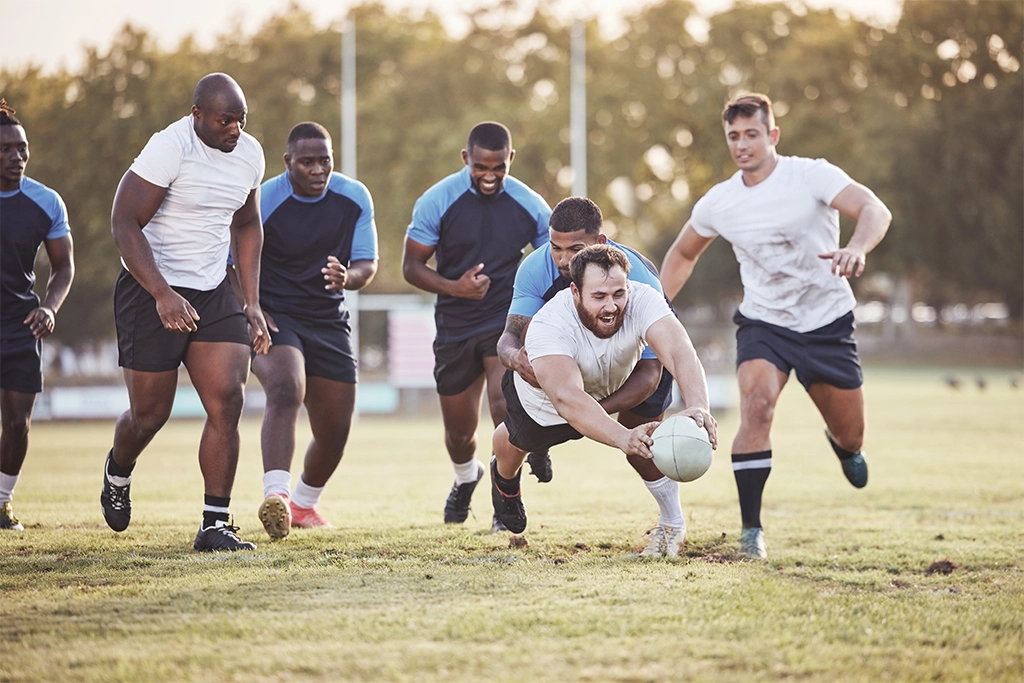
Feeling less pain and being ready to play are not always the same thing.
Your rehabilitation may need to progress towards the specific loads, movements and intensity your sport demands.
Recover: Manage symptoms, restore appropriate movement and understand the injury.
Rebuild: Develop strength, control and physical capacity.
Prepare: Gradually introduce greater loads, speed and more demanding movements.
Return: Progress towards the specific requirements of training, competition or your chosen activity.
Depending on your sport, that could involve:
Your progression should reflect what you need to get back to.
You don’t need to be an elite athlete to take your recovery seriously.
We work with people who simply enjoy staying active as well as those who train and compete regularly.
That could include:
Whatever your level, your rehabilitation should prepare you for the activity that matters to you.
As you recover, your programme may progress beyond traditional physiotherapy.
We want to know what’s happening, how it affects you and what you want to achieve.
You’ll be involved in the process and understand why we’re recommending a particular approach.
Your rehabilitation is based around your body, lifestyle and goals.
The aim isn’t simply to treat you repeatedly. We want to help you move forward and become more confident managing your body.
Choose the Summit location that works best for you.
Wrightington Hotel & Country Club
Moss Lane
Wigan
Greater Manchester
WN6 9PB
No.
You can book an assessment even if you’re unsure exactly what the problem is.
We’ll assess your symptoms and help you understand what may be happening.
Not necessarily.
Some activities may need to be temporarily reduced or avoided, while others may be safe to continue.
Your clinician can help you decide what is appropriate for your individual injury.
There isn’t one set timescale.
It depends on the injury, its severity, the demands of your sport and how you progress through rehabilitation.
Pain is only one part of the picture.
Depending on your injury, we may also consider strength, movement, control, confidence and your ability to tolerate the demands of your sport.
Usually, yes.
Exercises allow you to continue working on your recovery between appointments and can be progressed as your ability improves.
Yes.
If something keeps returning, we can assess your current symptoms alongside relevant factors such as strength, movement, training load and previous rehabilitation.
Often, yes.
There may be ways to maintain appropriate activity without compromising the injured area.
We can help you understand what is suitable.
Comfortable sportswear is ideal.
Wear clothing that allows your clinician to assess the injured area and see how you move.
In most cases, you can book private sports physiotherapy directly.
If you’re using private medical insurance, check whether your provider requires a referral or authorisation.
An injury may have interrupted your sport, but it doesn’t have to define what happens next.
Understand the problem, rebuild what you need and work towards returning with confidence.